
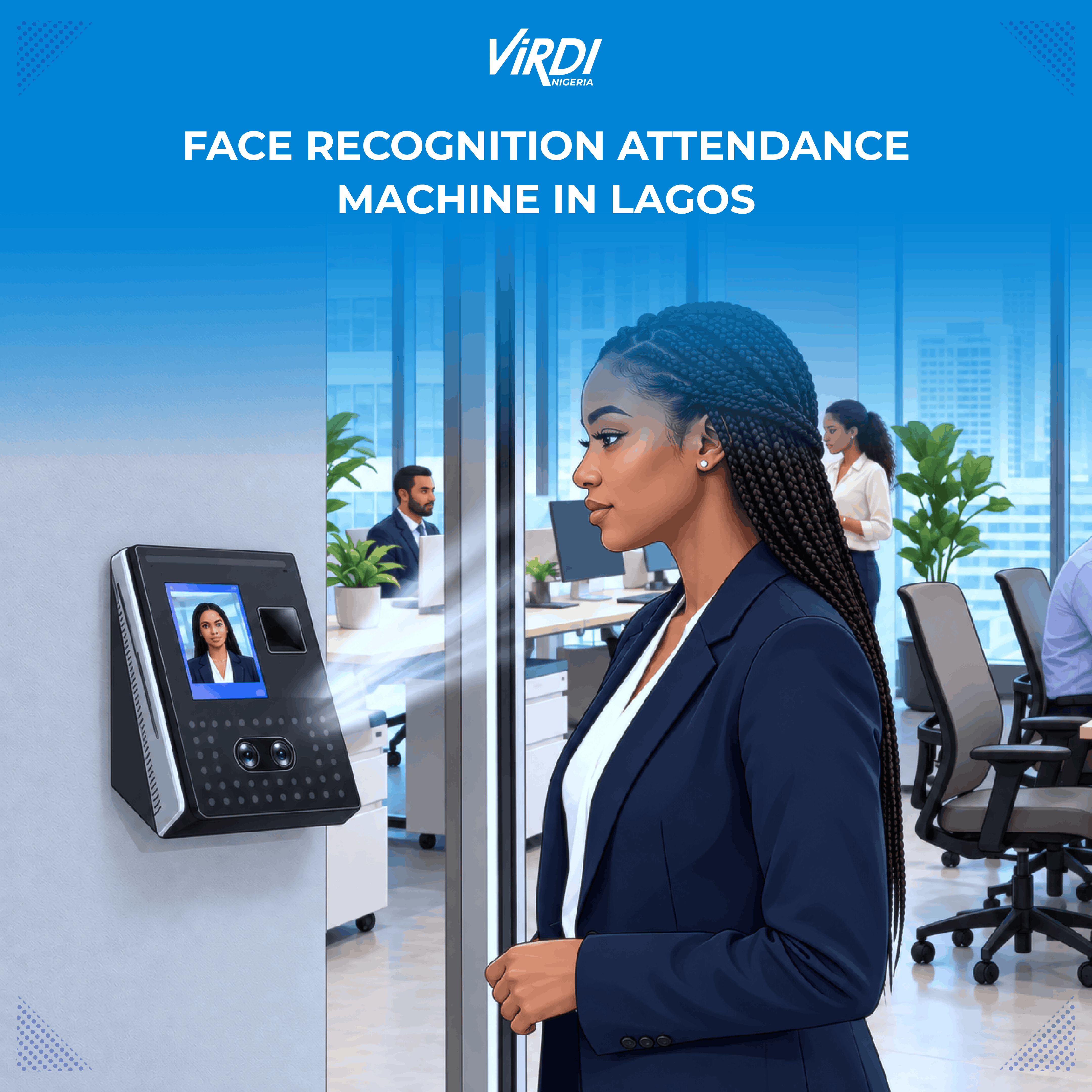
Face Recognition Attendance Machine in Lagos: Smarter Workforce Management
Managing employee attendance manually can become difficult as a business grows. Paper registers, cards, passwords, and manual timesheets can create room for errors and make it harder for HR teams to maintain accurate records. A face recognition attendance machine provides a modern way to record employee attendance using biometric identification, helping organizations improve accuracy, accountability, and workforce management.
Face recognition technology uses an individual’s facial features to verify identity. Biometrics can be used to identify or verify people based on physical characteristics such as facial features and fingerprints.
For organisations in Lagos, where businesses may have large workforces, multiple shifts, and busy office environments, an automated attendance solution can make everyday attendance management more efficient.
Why Businesses Need a Face Recognition Attendance Machine
Employee attendance affects payroll, productivity, scheduling, and workforce planning. When attendance records are inaccurate, HR teams may spend unnecessary time checking clock-in records, correcting mistakes, and investigating attendance discrepancies.
Traditional attendance methods can also make it difficult to obtain real-time information about who is present, late, absent, or on leave.
A biometric attendance system changes this process by connecting employee identification with attendance records. Instead of relying entirely on paper or manually entered information, employees can verify their identity through a biometric device.
This creates a more structured approach to recording working hours and gives HR teams better visibility into attendance patterns.
How a Face Recognition Attendance Machine Works
A face recognition attendance machine uses a camera and biometric recognition technology to verify an employee’s identity. During enrolment, an employee’s facial information is registered in the system. When the employee arrives at work, the device captures their face and compares it with the registered information.
Once the employee is successfully verified, the attendance event can be recorded.
The process is designed to make clocking in and out simple. Employees do not need to remember passwords or carry physical attendance cards. Depending on the system and configuration, attendance information can then be integrated with attendance management software for reporting and workforce administration.
NIST notes that biometric comparisons are based on measurements captured by biometric sensors and that factors such as image quality and presentation variations can affect biometric matching. This makes proper device selection, installation, configuration, and system management important when deploying biometric technology.
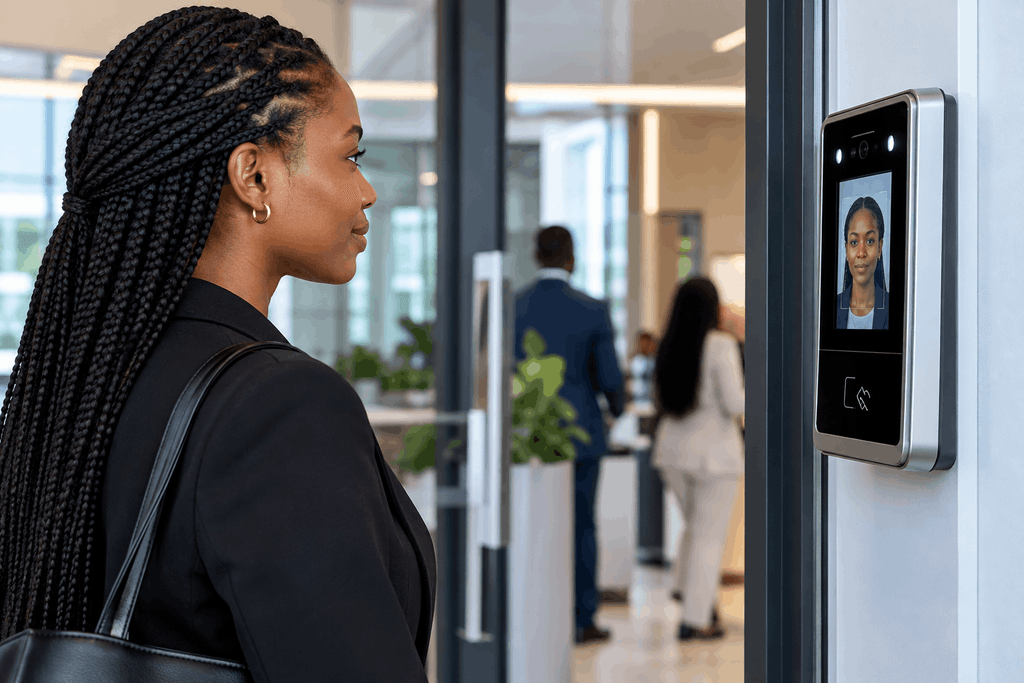
Smarter attendance tracking with facial recognition technology.
Benefits of Facial Recognition Attendance Systems
1. Accurate Employee Attendance Records
Automated biometric identification can reduce the need for manual attendance entries. Each successful verification creates an attendance event that can be processed by the organisation’s attendance system.
This can help HR departments maintain more consistent records and reduce administrative work associated with correcting paper-based attendance registers.
2. Reduced Proxy Attendance
One common concern with traditional attendance methods is proxy clocking, where one employee records attendance on behalf of another person.
A facial recognition system links attendance verification to the employee’s biometric identity. This can make it more difficult for another person to simply use someone else’s card or password to record attendance.
3. Faster Employee Clock-In
Large organisations can experience queues when employees use manual registers or systems that require several steps to authenticate.
Facial recognition can make employee verification quicker by allowing the system to recognise a registered user without requiring them to search for a card or enter a password.
4. Better Workforce Management
Attendance information becomes more useful when HR teams can easily access and analyse it.
Virdi’s vTiME system, for example, is designed for attendance and workforce management. Its listed capabilities include attendance registers, shift management, overtime management, holiday calendars, leave flags, and reporting-related workforce processes.
This means biometric attendance devices can form part of a wider workforce management system rather than operating as an isolated device.
5. Secure Biometric Access Control
Biometric technology can also be connected with access control processes. This can help organisations manage both employee identification and physical access to designated areas.
Virdi provides biometric devices and access control solutions designed for secure access and data recording.
For businesses with sensitive work areas, offices, factories, financial institutions, and other controlled environments, combining attendance and access management can create a more organised security infrastructure.
Where Can Businesses Use Face Recognition Attendance Machines?
Facial recognition attendance systems can be useful across different industries and workplaces.
Corporate Offices
Companies can use biometric attendance to record employee arrival and departure times while reducing reliance on manual attendance registers.
Factories and Manufacturing Facilities
Factories often operate multiple shifts and may have large numbers of employees. Automated attendance tracking can help HR and operations teams manage shift schedules and attendance records.
Schools and Educational Institutions
Schools and other institutions can use biometric identification for staff attendance management and workforce administration.
Banks and Financial Institutions
Financial organisations typically require strong controls around employee access and attendance. Biometric technology can form part of a broader access control and workforce management strategy.
Retail and Commercial Businesses
Retail businesses with multiple employees or locations can benefit from structured employee time tracking and centralised attendance records.
Choosing the Right Face Recognition Attendance Machine
Choosing an attendance machine should involve more than simply comparing device prices. Businesses should consider the size of their workforce, operating environment, required attendance features, integration requirements, and support.
Consider the following:
Recognition Accuracy: Ask how the system performs under the lighting and environmental conditions where it will be installed.
Attendance Software Integration: The device should work effectively with the organisation’s attendance or HR management software.
Reporting and Workforce Management: HR teams should be able to generate useful attendance reports for payroll, overtime, shifts, and workforce planning.
Scalability: Choose a solution that can support the organisation as the number of employees increases.
Data Protection and Security: Biometric information requires careful handling. NIST guidance highlights privacy and security considerations associated with biometric data and recommends clear information about how biometric data is collected, stored, protected, and used.
Technical support: Local installation, maintenance, training, and technical support can be important considerations for businesses deploying biometric systems.
Why Choose Virdi for Face Recognition Attendance Solutions?
Virdi Nigeria provides biometric machines, facial recognition technology, access control systems, time attendance solutions, and HR software for organisations in Nigeria. The company states that it serves businesses in locations including Lagos, Abuja, Ibadan, and Port Harcourt.
Its product ecosystem includes biometric devices alongside vTiME, a time and attendance management system designed to support employee tracking, scheduling, attendance registers, overtime, leave management, and other workforce processes.
This approach allows organisations to look beyond the physical attendance device and consider how biometric attendance information can fit into their wider HR and workforce management processes.
Improve Employee Attendance Management with Virdi
As organisations continue to adopt digital workforce management tools, automated biometric attendance can provide a more structured alternative to manual attendance processes.
A face recognition attendance machine in Lagos can help businesses simplify employee verification, improve attendance records, reduce proxy attendance, and support better workforce visibility.
However, the effectiveness of any biometric system depends on choosing appropriate technology, configuring it correctly, protecting biometric information, and integrating it with suitable attendance management software.
If your organisation is looking to modernise employee attendance and workforce management, explore Virdi’s biometric and attendance solutions to find a system that matches your business requirements.
Ready to improve the way your organisation manages attendance? Contact Virdi Nigeria today to discuss your biometric attendance and workforce management requirements.